
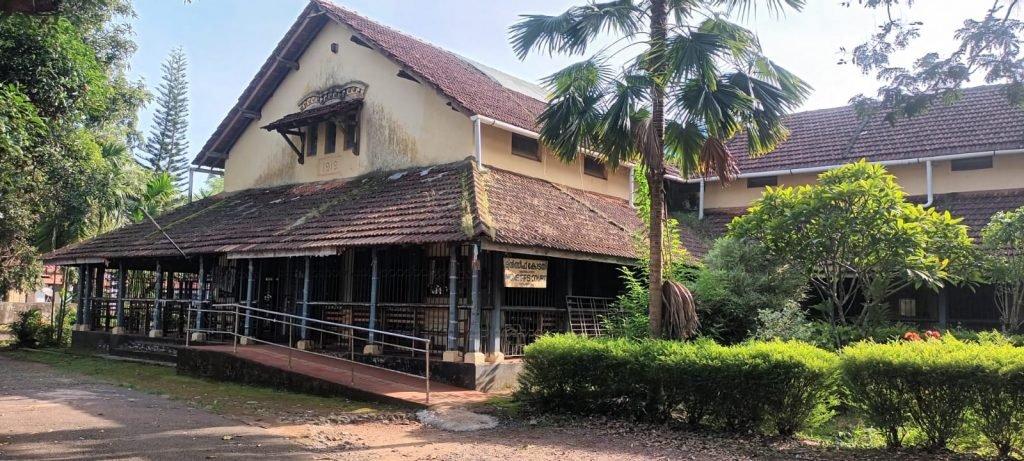
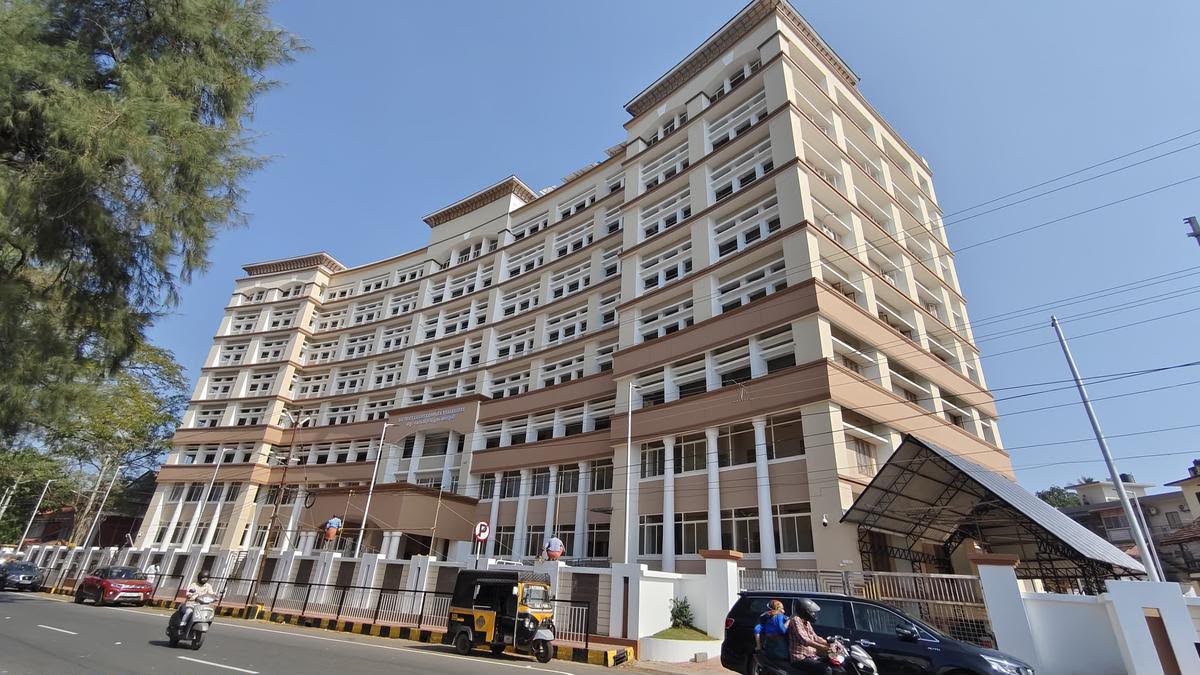
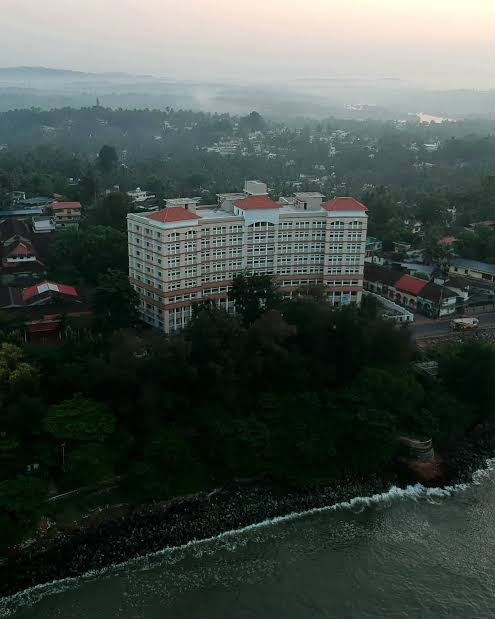
The historic courthouse, the earlier District Court Complex, the Civil & Criminal Courts building, and the new eight-storey complex inaugurated in 2025.
A Pioneering Chapter in India's Judicial History — often referred to as the “Mother of All Courts,” and a remarkable link between the early institutions of British-era Malabar and the modern constitutional judiciary of India.
The District and Sessions Court, Thalassery, occupies a distinctive place in the legal history of Kerala. Situated in the historic coastal town of Thalassery, the court represents more than two centuries of evolving judicial administration and stands as a remarkable link between the early institutions of British-era Malabar and the modern constitutional judiciary of India.
The judicial history of Thalassery can be traced back to 1793, when the town, then serving as the headquarters of the Northern Division of the Malabar Province, became an important centre of formal judicial administration. This period marked the beginning of an institutional journey that would gradually establish Thalassery as one of the principal centres of justice in North Malabar.
The historic courthouse, the earlier District Court Complex, the Civil & Criminal Courts building, and the new eight-storey complex inaugurated in 2025.
A particularly significant milestone came in 1802, with the establishment of the Provincial Court at Thalassery. This development formed part of the judicial reforms associated with the Cornwallis system, which sought to bring greater structure to the administration of justice and to distinguish judicial functions from executive administration.
The reforms represented an important stage in the development of an organised judicial hierarchy in British India. The judicial system emerging at Thalassery incorporated elements of British legal and administrative practice alongside existing Indian legal traditions and customs.
For this reason, historical accounts have regarded the establishment of the Provincial Court in Thalassery as a significant milestone in the development of exclusive judicial institutions in India. Rather than describing it simply as the “first independent judiciary,” its significance is more accurately understood as an important early step in the institutional separation and organisation of judicial functions in the region.
The judicial establishment at Thalassery continued to develop throughout the nineteenth century. In 1843, the Zilla Court underwent further reorganisation, with the judicial structure developing into the Civil and Sessions Judge system of the Zilla. This was part of the wider evolution of civil and criminal judicial administration during the period. The increasing differentiation of judicial functions laid the foundations for the more specialised court structure that would subsequently emerge across the region.
Thalassery's position as a major judicial centre was further strengthened in 1873, when it became a headquarters of District Judges. By this time, the importance of the Thalassery judiciary extended considerably beyond the immediate town. The judicial administration of the wider Malabar region was being organised through district-level institutions, giving Thalassery an important regional role. Over the course of the nineteenth century, therefore, Thalassery evolved from an early centre of formal judicial administration into an established judicial headquarters serving the wider region.
The twentieth century brought profound changes to India's legal and political structure. Independence, the adoption of the Constitution of India, and the reorganisation of states transformed the framework within which the judiciary operated.
With the formation of Kerala on 1 November 1956, the judicial institutions of the region entered the constitutional framework of the new State. Thalassery retained its importance as a major judicial centre and continues today as the seat of the Principal District and Sessions Court, Thalassery, serving the judicial administration of Kannur District.
What makes its history particularly remarkable is this continuity. An institution that developed during the era of the East India Company has continued through the colonial period, the transition to independence and the establishment of India's constitutional democracy.
After more than two centuries of judicial history, Thalassery entered a new chapter on 25 January 2025, with the inauguration of the new District and Sessions Court Complex. The new eight-storey complex represents a significant advancement in judicial infrastructure, bringing modern facilities and judicial offices together in a contemporary setting. Its inauguration marks not a departure from Thalassery's heritage, but the latest stage in its continuing judicial evolution.
The contrast is striking: the judicial administration that began in 1793 now operates within modern infrastructure designed to meet the demands of a contemporary constitutional judiciary.
Thalassery, headquarters of the Northern Division of Malabar Province, becomes an important centre of formal judicial administration.
Part of the Cornwallis reforms, marking an important stage in the separation and organisation of judicial functions.
Develops into the Civil and Sessions Judge system, differentiating civil and criminal judicial administration.
Thalassery becomes a headquarters of District Judges, serving the wider Malabar region.
The region's judiciary enters the constitutional framework of the new State of Kerala on 1 November 1956.
An eight-storey District & Sessions Court Complex opens on 25 January 2025, opening a new chapter in Thalassery's judicial history.
Today, the District and Sessions Court, Thalassery stands as a living testament to the evolution of justice in North Kerala. Its significance lies not merely in its age, but in its extraordinary continuity through changing systems of government, law and administration.
From the early judicial reforms of the eighteenth and nineteenth centuries to the constitutional judiciary of modern India, Thalassery's courts have remained an enduring part of the region's legal landscape. More than two centuries after its judicial journey began, Thalassery continues to stand as a place where history and the administration of justice meet — preserving a remarkable legal legacy while looking firmly towards the future.
Our founding advocates have practised at the Thalassery District Court for over three decades and are proud members of the Thalassery District Bar Association.
Meet our advocates → | Get in touch →